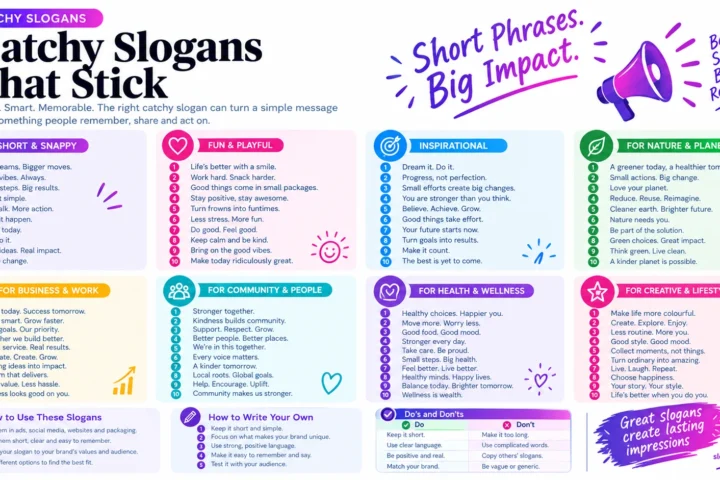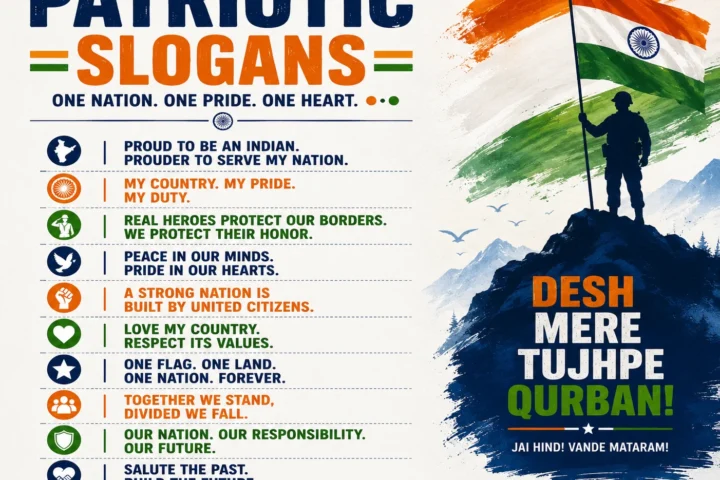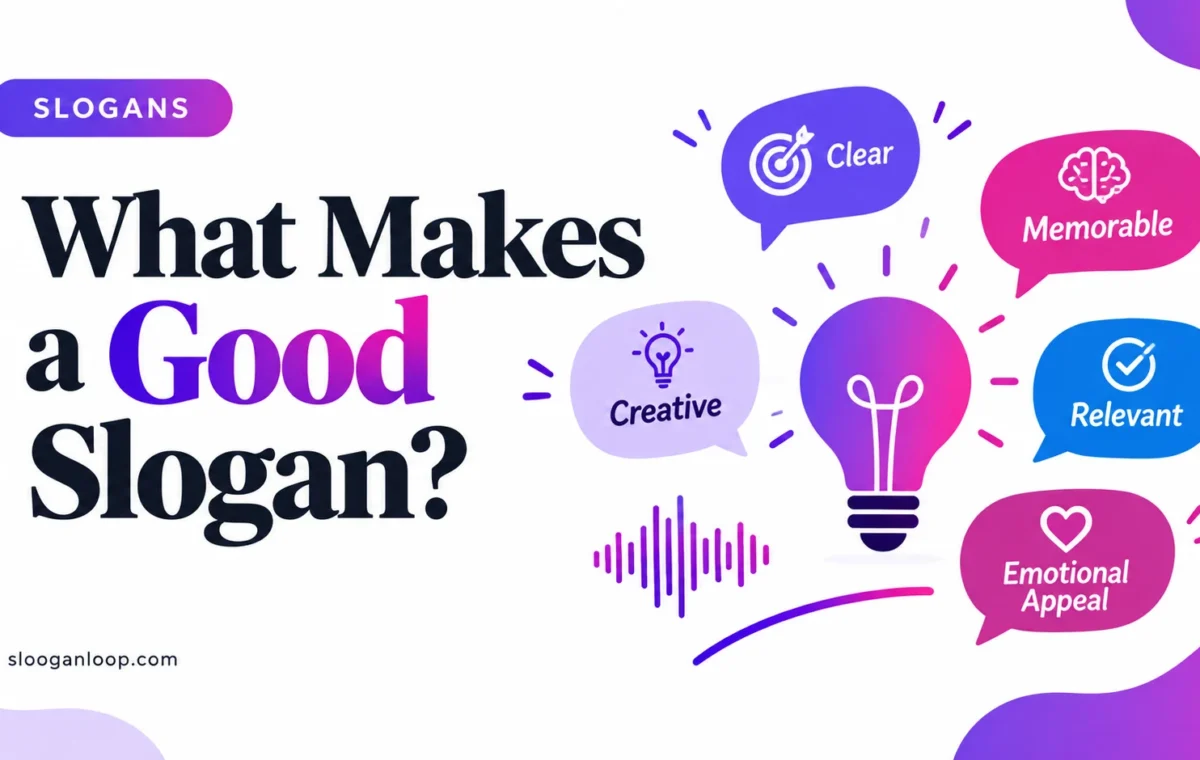
A strong slogan can turn a simple idea into a phrase people remember. If you’re wondering what makes a good slogan, this guide gives you 50 original examples plus easy tips for creating one yourself.For more insights read here:- top 100 company slogans and catchy jewelry phrases.
- Top 10 Quick List
- Short & Simple Slogans
- Catchy & Fun Slogans
- Rhyming Slogans
- Professional & Business Slogans
- Posters & Social Media Slogans
- How to Use These Slogans
- How to Write Your Own
- 1. Keep It Short
- 2. Focus on One Message
- 3. Use Strong, Familiar Words
- 4. Add Rhythm or Rhyme
- 5. Make It Sound Natural
- What Makes a Good Slogan: Do and Don't
- FAQs About What Makes a Good Slogan
- What makes a good slogan memorable?
- How long should a good slogan be?
- Does a slogan have to rhyme?
- What words should a slogan use?
- Can a slogan be a full sentence?
- Conclusion
Top 10 Quick List
- Make Every Moment Matter.
- Small Words, Big Ideas.
- Simple Ideas Stay.
- Think Fresh, Move Forward.
- Your Goal, Your Spark.
- Keep It Clear, Keep It Close.
- One Message. One Memory.
- Say Less, Mean More.
- Start With Purpose.
- Make Your Message Memorable.
Short & Simple Slogans
Short slogans are often easier to remember, repeat, print, and share. A few carefully chosen words can communicate an entire idea.
- Make It Matter.
- Think. Create. Grow.
- Keep Ideas Moving.
- Make Your Mark.
- Simple Says More.
- Ideas That Stick.
- Speak With Purpose.
- Keep It Memorable.
When to use: These work well for business names, websites, logos, posters, packaging, social profiles, and promotional materials.
Catchy & Fun Slogans
A catchy line has a natural rhythm or an unexpected combination of words. It should sound good aloud and be easy to repeat.
- Think Bright, Make It Right.
- Good Ideas, Great Energy.
- Create More, Remember More.
- Fresh Thinking Starts Here.
- Make Your Message Spark.
- Catch the Idea, Keep the Feeling.
- Big Thought, Simple Words.
- Give Your Ideas a Voice.
When to use: Try these for social media campaigns, creative projects, small businesses, events, promotions, and youth-focused campaigns.
Rhyming Slogans
Rhymes can give a slogan a musical quality. They can also make a phrase easier to recall, especially when the wording stays natural.
- Think It Bright, Make It Right.
- Plan With Care, Show You Dare.
- Say It Clear, Keep It Near.
- Make It Wise, Catch Their Eyes.
- Start With Style, Stay Awhile.
- Share the View, Make It New.
- Speak With Grace, Find Your Place.
- Create Today, Lead the Way.
When to use: Rhyming lines are useful for school posters, campaigns, advertisements, events, social posts, and messages aimed at quick recall.
Professional & Business Slogans
A business slogan should support the brand’s main message without trying to explain everything at once. Clear, confident language usually works better than complicated wording.
- Ideas Built for Progress.
- Purpose Behind Every Word.
- Clear Messages, Strong Connections.
- Your Vision Starts Here.
- Turning Ideas Into Impact.
- Built Around Better Thinking.
- Where Purpose Meets Progress.
- Simple Messages. Strong Brands.
When to use: These are suitable for company websites, presentations, business cards, service pages, proposals, and professional campaigns.
Posters & Social Media Slogans
Online and visual slogans need to work quickly. A reader may only glance at the words for a second, so the main idea should be obvious.
- Give Your Message a Moment.
- Say Something Worth Sharing.
- One Thought Can Start Change.
- Make Every Word Count.
- Let Your Idea Be Heard.
- Turn Attention Into Action.
- Share the Thought, Spread the Spark.
- A Clear Message Travels Far.
When to use: Use these on Instagram graphics, Facebook posts, event posters, presentation slides, campaign artwork, and digital advertisements.
How to Use These Slogans
A good slogan can appear in many places, but its wording should fit the platform.
- Posters: Use a short line with large, readable text. Keep the slogan visually separate from extra information.
- Instagram captions: Place the slogan near the beginning so readers see the main idea quickly.
- T-shirts: Choose a phrase that still makes sense without additional explanation.
- Business materials: Match the slogan with your company’s purpose, audience, and tone.
- Campaigns: Repeat the same core message across posters, social posts, videos, and other materials for consistency.
How to Write Your Own
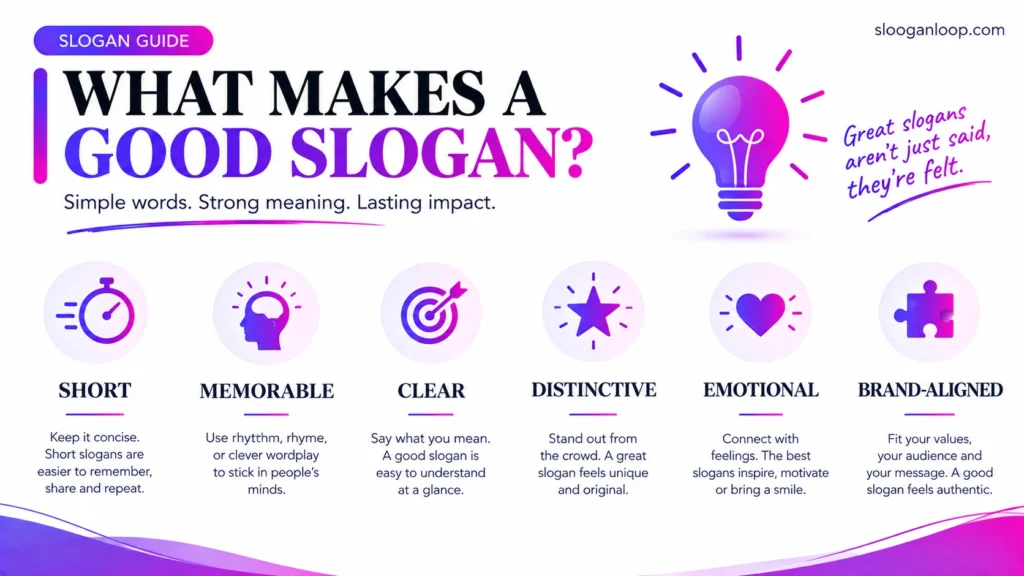
Understanding what makes a good slogan becomes easier when you break the process into a few simple steps.
1. Keep It Short
Start with the main idea and remove unnecessary words. A slogan does not need to explain every detail about a product, service, cause, or organization.
2. Focus on One Message
Avoid squeezing several ideas into one sentence. Pick the single thought you want people to remember and build the slogan around it.
3. Use Strong, Familiar Words
Simple words often have more impact than complicated vocabulary. Choose language that your audience can understand immediately.
4. Add Rhythm or Rhyme
A natural rhythm can make a phrase more enjoyable to say. Rhyme can help too, but it should never feel forced just to make the words match.
5. Make It Sound Natural
Read the slogan aloud several times. If it feels awkward, too long, or difficult to repeat, keep editing until it sounds effortless.Also explore:- can slogans be long?.
What Makes a Good Slogan: Do and Don’t
| Do | Don’t |
|---|---|
| Keep the message clear | Try to say everything |
| Use memorable words | Use complicated vocabulary |
| Match the audience | Ignore who will read it |
| Create a natural rhythm | Force a rhyme |
| Make it easy to repeat | Make it unnecessarily long |
| Support the main idea | Add unrelated promises |
FAQs About What Makes a Good Slogan
What makes a good slogan memorable?
A memorable slogan is usually short, clear, distinctive, and easy to repeat. Rhythm, word choice, emotion, and a single strong idea can also help people remember it.
How long should a good slogan be?
There is no fixed word count, but shorter slogans are often easier to remember. Aim to communicate one clear thought without adding words that do not contribute to the message.
Does a slogan have to rhyme?
No. Rhyming can make a slogan catchy, but it is not required. A clear phrase with strong wording can be memorable without any rhyme.
What words should a slogan use?
Use words that fit the audience and purpose. Action words, positive language, simple descriptions, and words connected to the main benefit or idea can all work well.
Can a slogan be a full sentence?
Yes. A slogan can be a phrase, sentence, question, command, or short statement. The important thing is that it communicates a clear idea and feels easy to remember.
Conclusion
Knowing what makes a good slogan helps you create lines that are clear, useful, and memorable instead of simply filling space. Keep your message focused, choose simple words, and give the phrase a natural rhythm. For more fresh ideas, explore the other original slogan lists on slooganloop.com.